The South Caribbean reborn: how Puerto Viejo became a refuge for Costa Rican wildlife
Talamanca, Costa Rica. A few minutes from the centre of Puerto Viejo, among damp trails and centuries-old trees, something is happening that few tourists stop to take in: this strip of the South Caribbean has become one of the most active areas for wildlife conservation in the whole country.
A sanctuary that never rests
The Jaguar Rescue Center, in Playa Chiquita on the outskirts of Puerto Viejo, is not a zoo: it is an active rehabilitation centre dedicated to taking in injured, orphaned or displaced wild animals and returning them, whenever possible, to their natural habitat. Sloths, monkeys, toucans, snakes, birds of prey and wild cats pass through its hands in a process that combines science, patience and an entire community committed to the cause. This kind of effort is not an isolated one. The region also runs constant monitoring programmes for two- and three-toed sloth populations, where local guides and research groups work side by side to keep records that help us understand how these species are adapting, and in many cases thriving, in the forests near Talamanca's private reserves.
Turtles that keep choosing these beaches
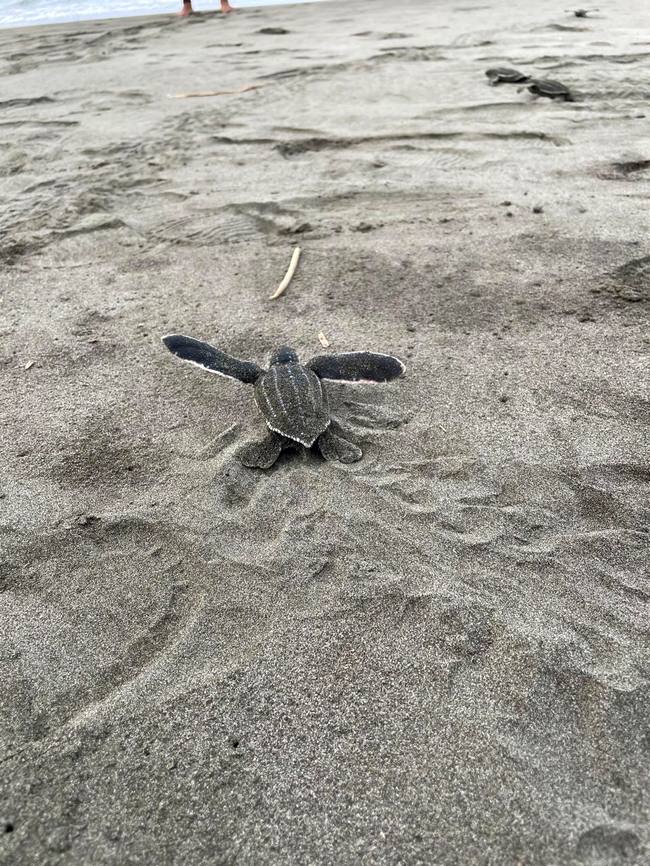
Every season, the beaches of the Gandoca-Manzanillo Wildlife Refuge welcome the sea turtles that come to nest, just as they have for generations. The fact that turtles still choose these beaches is in itself a sign of ecological health: females don't nest just anywhere, only on beaches where the conditions (darkness, sand temperature, calm) are still right. Today, turtle watching in Gandoca is done only with a certified guide, a measure that not only protects the animals but has also made local communities the first guardians of this natural cycle, generating genuine income tied directly to conservation.
Jungle, mangrove and reef in a single embrace
Few places in the world let you cross tropical rainforest, wetlands, mangroves and coral reef in a single walk and end up on an untouched beach. That is exactly what the corridor between Manzanillo and the Panamanian border offers. Local naturalist guides, many of them trained within their own communities, know the movements of tapirs and pumas in the area by heart and can spot a motionless sloth in a tree within seconds, knowledge that only comes from years of close, respectful observation of the land.
Volunteering that builds a future
Conservation in Puerto Viejo doesn't depend on experts alone: it also depends on hands willing to help. Volunteer programmes in the area let people from all over the world join restoration work in nurseries, build enclosures for animals in rehabilitation, and take part in environmental education in nearby schools and communities. Each programme is run in partnership with long-established local organisations, ensuring that the volunteer's work reinforces, rather than replaces, the knowledge and leadership of the people of Talamanca.
An ecosystem that sustains its own protection
What is remarkable about Puerto Viejo is that conservation doesn't depend on a single institution or a single effort: it is a living network of rescue centres, cooperatives that plant native species, community guides, school programmes and conscious visitors who are drawn precisely by the natural wealth the community itself works to protect. Every sloth spotted on a trail, every turtle that returns to nest in Gandoca and every animal that leaves a rescue centre rehabilitated to go back to its home in the jungle is proof that in this corner of the Costa Rican Caribbean, nature and people have found a way to look after each other.